


Provitalize vs Seed: Which is the Better Probiotic?
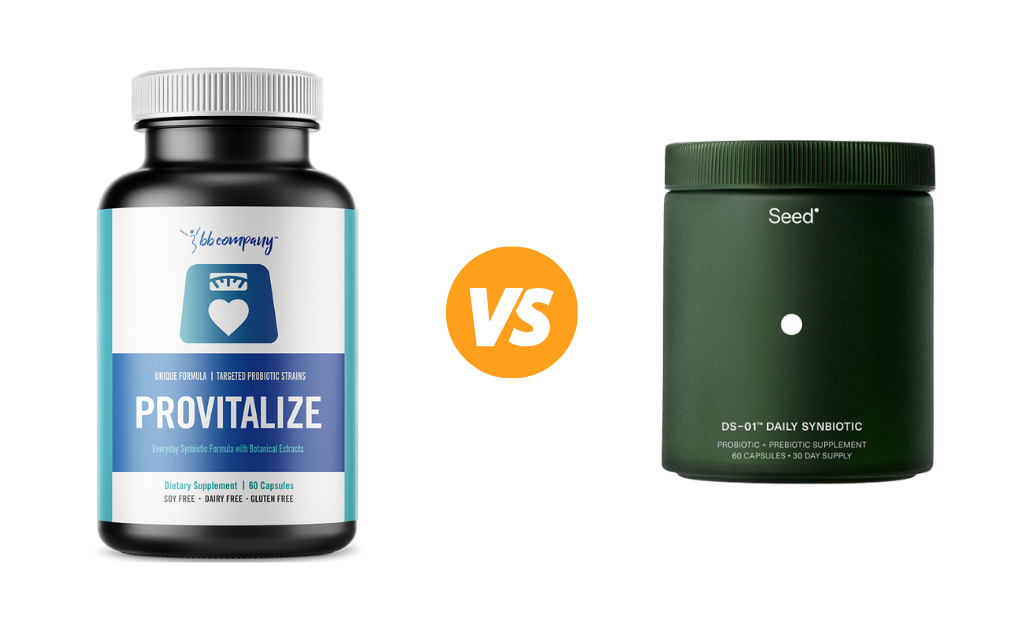

If the name is any indication, Provitalize is a probiotic supplement. So, if you’re wondering “is Provitalize a probiotic?” the answer is yes. More specifically, the probiotic strains and additional ingredients were chosen for menopause support.
As interest in probiotics grows, so do the number of options on the market, meaning Provitalize isn’t without competitors. If you’re currently researching the best probiotic for you, you’re probably doing a lot of comparing and contrasting between different formulas.
For example, what would a search for Provitalize vs Seed reveal? To help you make an informed decision, here’s what to keep in mind as you consider Seed vs Provitalize.
What’s the Point of Probiotics?
Before our deep dive into Provitalize vs Seed, let’s cover the basics of probiotics 101.
The word “probiotics” refers to live microorganisms, or bacteria. While some are harmful, plenty are beneficial. Your body technically has bacteria all over, such as on your skin, but for this purpose, we’re only talking about those that live in your gastrointestinal (GI) tract. Collectively, this makes up your gut microbiome, an ecosystem of trillions of bacteria that are involved in digestion, immunity, hormone secretion, and more, per the Cleveland Clinic.
Back to probiotics: These are the “good” kind of gut microbes. In a balanced gut microbiome, there are more good bacteria than bad. Unfortunately, this ideal balance isn’t always the case. When the gut is overrun by harmful bacteria, this disrupts the balance and can cause gut dysbiosis. GI problems like abdominal pain, bloating, gas, diarrhea, and constipation are the main symptoms of this disruption, research shows.
How can probiotics help? Researchers are still looking into this, but what we currently know is promising. For example, probiotics (particularly when combined withprebiotics) may remedy dysbiosis, some research suggests. Other research has shown that probiotics could even prevent dysbiosis.
Here are some fast facts about probiotics, according to research:
-
You may not be waiting long for relief. One study found that probiotics increase gut microbial diversity in just seven days.
-
The possible benefits aren’t limited to the gut. Probiotics may reduce body weight and prevent weight gain, research shows.
-
There’s a link between probiotics and menopause. While more research is needed, there’s some early evidence that probiotics can help manage menopause.
What is Provitalize?
Provitalize is a probiotic supplement made by BB Company. The ingredients were chosen based on how they could potentially support women during menopause.
Key Ingredients in Provitalize
As we’ve established, Provitalize is a probiotic. It contains three strains:L. Gasseri SBT2055, B. Breve IDCC04401,andB. Lactis R101-8. It also contains fructooligosaccharides (FOS) prebiotics to further support gut balance.
Per the Provitalize ingredients label, it also contains various herbal and plant extracts, such as turmeric root, moringa leaf, and curry leaf.
Benefits of Taking Provitalize
What’s the purpose of Provitalize’s ingredients? Research suggests the following:
-
Improved gut function. The pre- and probiotics in Provitalize may increase diversity of bacteria in the gut microbiome. This could alleviate some GI issues, such as bloating and constipation.
-
Weight management support. Probiotics aren’t the only potential Provitalize weight loss ingredients. Curcumin, a compound in turmeric root, and moringa leaf have been shown to possess anti-obesity properties.
-
Reduced inflammation. Several ingredients in Provitalize are associated with anti-inflammatory properties, including curcumin, moringa leaf, and curry leaf. Why does this matter? Postmenopausal women tend to have higher rates of inflammation.
-
Lessened joint pain. Some people are drawn to Provitalize for joint pain. Here’s why: The curcumin in turmeric may help alleviate certain types of joint pain, such as osteoarthritis, some research shows.
-
Fewer hot flashes. When paired with vitamin E, curcumin has been shown to reduce hot flashes.
Keep in mind that every body is unique, so your experience may vary. To read up on others’ experiences, check out the reviews on Provitalize.
What is Seed?
Seed is the name of a company that has several dietary supplements, including probiotics. There are two oral probiotics, though one is for children. For the sake of this Seed vs Provitalize comparison, we’ll focus exclusively on Seed’s probiotic supplement for adults: DS-01® Daily Synbiotic.
Key Ingredients in Seed
Like Provitalize, Seed focuses on probiotics. In fact, Seed’s DS-01® Daily Synbioticmainlycontains probiotics — two dozen, to be exact. The full list of probiotics can be found on Seed’s Supplement Facts.
It also contains prebiotics, which are extracted from pomegranates. Prebiotics can come from various sources, but their function is often the same, which is to feed the probiotics. So, its pre- and probiotics work together synergistically. This is probably where the phrase “Daily Synbiotic” comes from.
What else is in Seed’s supplement? That’s it actually. The formula consists entirely of pre- and probiotics. With so many strains, it strikes a balance between being laser focused on the microbiome while offering a variety of bacteria.
Benefits of Taking Seed
Seed’s DS-01® Daily Synbiotic is heavily focused on the gut. With so many probiotic strains, its purpose is clear: It’s designed to support a healthy gut. It even says so on Seed’s website:
-
Reduces gas and bloating
-
Improves regularity
-
Makes bowel movements easier
However, Seed’s website also says its benefits may extend beyond the gut. According to Seed, DS-01® Daily Synbiotic may also support immune, skin, and heart health.
Possible benefits are just that — possible. It would be nice to say everyone who takes a certain supplement will reap its benefits, but each person is too unique to predict a universal response.
Provitalize vs Seed: Which is the Better Probiotic?
We have existing guides that put other competitors —Provitalize vs Hormone Harmony — under the microscope. Now, it’s time to compare Provitalize vs Seed DS-01® Daily Synbiotic.
Probiotic Strains
These two products aren’t identical, so naturally, the probiotic strains found in Seed vs Provitalize are going to differ.
Here’s what’s in Provitalize and why:
-
L. Gasseri SBT2055, which may have anti-obesity effects.
-
B. Breve IDCC04401, which may alleviate GI symptoms.
-
B. Lactis R101-8, which may reduce inflammation, particularly when induced by diet.
However, Provitalize contains FOS prebiotics too, making it a synbiotic formula. In total, Provitalize provides 400 milligrams (mg) of its synbiotic blend.
What about Seed’s flagship product, DS-01® Daily Synbiotic? It contains 24 probiotic strains as well as prebiotics. Because it offers both, it’s also a synbiotic formula. While Seed contains a wider range of bacterial strains, it’s not necessarily more potent. Seed’s probiotics come to 302 mg.
Potential Outcomes
Provitalize marries the gut focus of probiotics with the weight management and anti-inflammatory support of herbal and plant extracts. It was specifically formulated with menopausal women at the forefront, meaning any potential benefits could make the notorious transition a bit smoother.
Here’s an overview of Provitalize’s potential benefits, per the research above:
-
Increased gut diversity (aka more good gut bugs to outnumber the bad)
-
Reduced GI discomforts, such as gas, bloating, constipation, and diarrhea
-
Support with weight management via ingredients with anti-obesity properties
-
Fewer hot flashes, which could also reduce night sweats, leading to improved sleep
-
Reduced joint pain thanks to ingredients with anti-inflammatory activities
The reviews on Provitalize also mention other possible outcomes. For example, users have reported improvements in energy levels, libido, mental clarity, mood, and more.
Moving onto Seed: Its DS-01® Daily Synbiotic places a significant emphasis on the gut. With 24 bacterial strains plus prebiotics, the formula focuses on GI issues like gas, bloating, regularity, and overall GI discomfort. It may also have positive effects on the skin, immune system, and heart, according to Seed’s website.
However, always be sure to keep your expectations in check. We’re all different, so outcomes from supplements can (and do) vary from person to person.
Delivery and Technology
Vegetable capsules are pretty standard for dietary supplements, but delivery matters when it comes to probiotics. Why? Probiotics are alive — you want them to be alive when they reach your doorstep, but more importantly, when they reach your gut.
Provitalize probiotics don’t require refrigeration, which is a good sign of the formula’s stability. The capsules are largely to thank for this as they’re DRCaps™, delayed-release capsules that help probiotic strains withstand harsh stomach acid.
Seed addresses this with its own capsules, ViaCap®. This is a capsule-in-a-capsule system — the inner capsule contains probiotics while the outer capsule provides prebiotics. As Seed puts it, this helps the probiotics reach the colon, no refrigeration necessary.
Safety and Side Effects
Similar to the possible beneficial effects, side effects can vary.
Typically, side effects from probiotics are mild and temporary. For example, a sudden influx of probiotics can lead to gas and bloating, notes the Cleveland Clinic. Probiotic usage could also lead to softer stools and abdominal pain, though side effects are mostly temporary, sources state.
Provitalize is considered generally safe for the average adult. This comes from current understandings of each ingredient individually, though there aren’t any clinical studies on the tolerability of them combined.
The same may be true of Seed, who states that probiotics are generally safe for most people, but there are exceptions. Seed recommends consulting a healthcare practitioner if you’re pregnant, nursing, taking medication, or have a medical condition.
Unsurprisingly, tolerability can vary from person to person, which is why a chat with your doctor is a good idea.
Scientific Backing and Transparency
Provitalize and Seed share the following quality assurances:
-
Research-backed ingredients: Provitalize ingredients are based on what researchers have discovered. According to Seed, clinical trials are in progress.
-
Third-party testing: Independent testing is not required, but both Provitalize and Seed are evaluated by a third party for purity, potency, and quality.
-
Compliant with current Good Manufacturing Practices (cGMP): Provitalize and Seed are manufactured according to strict FDA requirements.
-
Transparent labeling: Each has the Supplement Facts clearly labeled, making it easy to know the exact ingredients and their amounts in each serving.
-
Allergen-friendliness: The formulas are both free from certain allergens, such as dairy and gluten. They’re also vegetarian-friendly.
Price and Value
Provitalize vs Seed: Are there any price differences to know?
Provitalize retails for $53 per bottle, which contains 30 servings. However, you could save when you buy in bulk or subscribe. For example, quarterly subscriptions are 25% off, sothe cost of Provitalize is $39.75.
Seed retails for $49.99 per 30-day supply. There are also opportunities to save when you buy a 3- or 6-month supply at a time. For example, a 6-month supply is 15% off, sothe cost of Seed is $42.49.
All in all, the cost is pretty similar. Seed is slightly cheaper on a one-time basis. On a subscription basis, Provitalize offers greater savings.
So, Which is Better for YOU?
Deciding between Provitalize vs Seed comes down to what’s best for you, as determined by yourself and your healthcare team. Though it’s a personal decision, the following recap may help inform your feelings about the two.
First, what do Seed and Provitalize have in common? They both provide a synbiotic formula — one that contains pre- and probiotics. So, they could help colonize the gut with more beneficial bacteria. This could help reduce GI issues like gas, bloating, irregularity, and so on. Both also utilize research-backed ingredients, prioritize quality assurance, and offer similar price points.
So, what sets them apart? It mainly comes down to the ingredients in each and their respective focuses. While both place an emphasis on probiotics, they do so differently. Seed’s DS-01® Daily Synbiotic may offer more variety while Provitalize may offer more by weight. What’s more, Provitalize also provides additional ingredients, further positioning it as a menopause support supplement, not just a probiotic blend.
All this to say: If you’re looking for increased microbial diversity, Seed may help expose your gut microbiome to more strains. If you’re looking for support with both gut function and menopause, Provitalize may be of more interest to you.
Bringing Our Seed vs Provitalize Guide to a Close
Provitalize vs Seed…Two worthy competitors have gone head to head in this comparison. There’s a lot to appreciate about both, though supplements aren’t without their constraints too. For personalized advice regarding the two, check in with a trusted healthcare professional. In the meantime, kudos to you for doing research on probiotics and how they may fit into your gut and/or menopause routine.
English